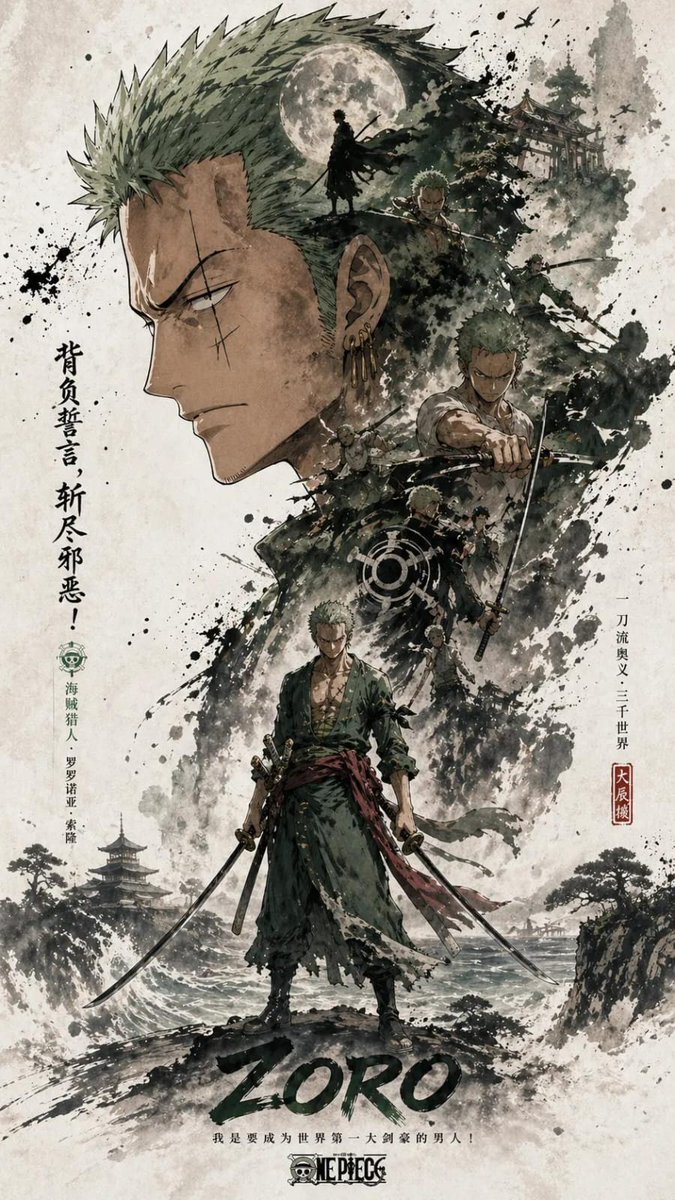
Oriental Aesthetic Silhouette Poster
Prompt
Create a 16:9 artistic character identity board (CHARACTER IDENTITY BOARD). Use Image A as the subject and visual medium. Name: . . (Modify this line according to your needs.) Soft off-white background. No environmental background, no Logo, no watermark. Design direction: Do not create a standard character reference sheet. Create a cinematic identity project that looks like a combination of a high-end animation studio's character studies and an art book layout. The layout should be asymmetrical, elegant, and impressive. Use large areas of negative space, varied image proportions, and deliberate imbalance. Avoid grids, blueprint design, catalog-style layout, and repeated turnaround displays. Important layout rules: Do not let any character images overlap. Each view must have clear spacing and breathing room. Keep all full-body images, portraits, silhouettes, and detail studies visually independent of one another. No facial cropping, limb occlusion, stacked figures, or overlapping poses. Main composition: Place a large full-body hero view slightly off-center as the visual anchor. Around it, arrange smaller auxiliary studies with neat spacing: neutral full-body view, back view, side view, seated pose, leaning pose, crouching pose, high-angle view, low-angle view, and expression studies. Each view should feel like an independent, clear character study, not a frame from the same scene. Identity lock: Maintain strict identity consistency across all views: same face, same facial proportions, same hairstyle, same clothing, same body proportions, same pose language, same visual personality. Practical reference details: Make the character easy to identify for subsequent image and video generation: clear face shape, clear hairstyle silhouette, clear clothing silhouette, clear body type, clear hands, clear poses, clear expression range. Art sections: Include a small silhouette study area showing 2-3 simplified black character silhouettes. Include a small expression study area showing subtle emotional changes. Include a small detail study area showing key visual features of the face, hair, and clothing. Typography design: Add a stylish character ID module. Keep it minimal, striking, and art-directed. Use only: NAME, ROLE, CORE MOOD, VISUAL SIGNATURE. Use small script labels only when necessary. Subtle editorial arrows and annotation marks are allowed, but keep them minimal and elegant. Style: minimal, cinematic, premium, art-book, clean, expressive, production-ready. The final image should convey an artistic character identity project design feel.